
A deep and personal Prodoshe Prakritojon book review exploring history, identity, caste, Bengal’s transformation, and the poetic brilliance of Shawkat Ali’s masterpiece.
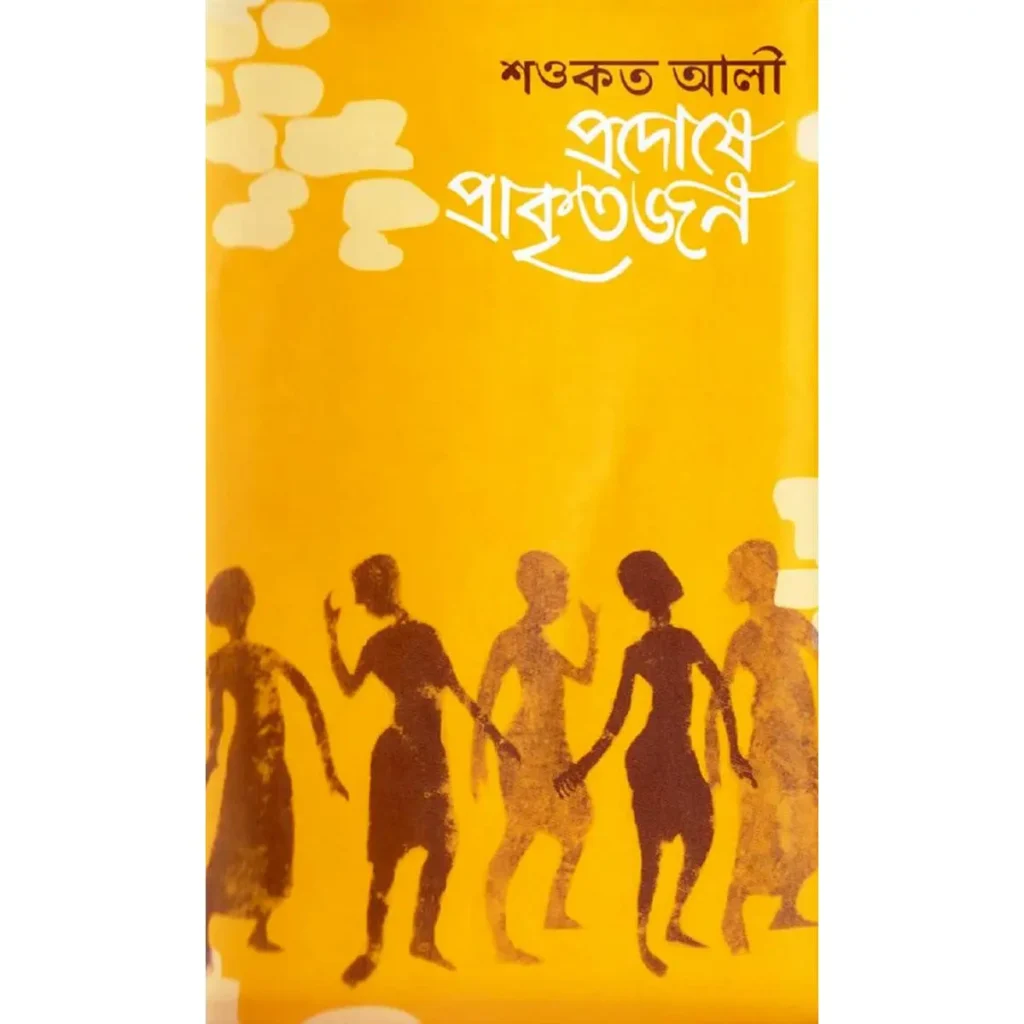
Prodoshe Prakritojon is not just a historical novel. It is one of those books that completely rearranges the way you think. I have read many important books on Bengal, history, identity, religion, and culture, but very few books have affected me the way this one did. This novel did not simply tell me a story. It pushed me into a lifelong search for answers about Bengal—its people, its transformations, its wounds, and its forgotten history.
As a student of history, I had always been fascinated by certain difficult questions. Why did Bengal, once deeply shaped by Buddhism and Hinduism, gradually become Muslim-majority? What happened socially and psychologically beneath the surface of political change? What kind of fractures existed inside society long before foreign invasions arrived? Most history books discuss rulers, wars, and dynasties. But Prodoshe Prakritojon forced me to look somewhere else: at ordinary people. That is what makes this novel extraordinary.
Shawkat Ali shifts the focus away from kings and places it firmly on the “প্রাকৃতজন” — the common people. The laborers, artisans, lower castes, Buddhists, marginalized communities, and forgotten bodies who carried history but never entered official records. Through characters like Shyamanga and Leelabati, the novel shows a Bengal that feels deeply human, fragile, divided, and emotionally exhausted.
The story is set in twelfth-century Bengal, just before Bakhtiyar Khalji’s invasion. But this is not a war novel in the traditional sense. The real tension of the book comes from decay within society itself. The Sena rule appears rigid and disconnected. Caste oppression has become brutal. Social dignity is reserved for a few. Entire groups of people live humiliated, excluded, and unseen. The novel quietly asks a dangerous question: when a society stops respecting its own people, how long can it survive intact?
That question stayed with me long after I finished the book.
One of the greatest strengths of Prodoshe Prakritojon is that it refuses simplistic explanations. Shawkat Ali does not reduce history into slogans. He does not romanticize the past either. Instead, he creates a layered portrait of a civilization standing at the edge of transformation. Reading the novel, one begins to understand that political conquest alone cannot change a land so deeply. Social conditions prepare the ground first. And then there is the atmosphere of the novel.
The title itself is brilliant. “প্রদোষ” means twilight—not full darkness, but the hour before darkness settles completely. That feeling runs through every page of the book. Everything feels uncertain. Old structures are collapsing, but the future is still unclear. Fear hangs over the land. There is tension in conversations, relationships, rituals, and even silence. The novel captures the emotional climate of a dying age with astonishing skill. But what truly makes this book unforgettable is the language.

Honestly, I do not think modern Bengali literature has many novels written with this level of linguistic beauty and intensity. The prose is difficult at times, but in the best possible way. It is poetic without sounding artificial. It feels ancient, earthy, textured. Shawkat Ali writes Bengal almost like a living organism—its rivers, dust, temples, bodies, hunger, decay, and loneliness all become part of the storytelling. Some sentences stay in the mind for years. This novel also changed the way I look at Bangladesh itself.
Before reading it, I understood Bengal historically. After reading it, I began to feel Bengal differently. The land stopped feeling like a modern political map and started feeling like a layered civilization shaped by centuries of conflict, migration, memory, spirituality, violence, and survival. The novel gave me a deeper emotional connection with ancient Bengal and its people. And perhaps that is why this book became a turning point in my reading life.
After reading Prodoshe Prakritojon, I went back to books differently. I reread ভোলগা থেকে গঙ্গা with far greater seriousness. Then I read হাজার বছরের বাঙালি সংস্কৃতি, আমরা কি বাঙালী, স্বদেশ অন্বেষণ and many more works exploring Bengali identity, heritage, and cultural evolution. In many ways, this novel became the gateway to a much larger intellectual journey.

(শওকত আলীর ‘প্রদোষে প্রাকৃতজন’ থেকে)
Another remarkable aspect of the book is its characters and relationships. Nothing feels decorative or forced. Love, loneliness, caste anxiety, desire, tenderness, and fear flow naturally through the story. Shawkat Ali understands that social systems shape even the most intimate parts of human life. Power enters relationships. Oppression enters desire. Survival enters morality. That psychological depth is what gives the novel its lasting power.
The questions it raises about social exclusion, religious identity, class hierarchy, and political collapse are still alive in South Asia. The setting may be twelfth-century Bengal, but the emotional and social realities often feel disturbingly modern. That is the mark of truly great literature—it survives beyond its historical setting.
I genuinely believe Prodoshe Prakritojon is one of the finest novels ever written in Bengali literature. Not simply because it is historically important, but because it has immense emotional and intellectual depth. It is philosophical without becoming abstract, political without becoming preachy, and historical without becoming dry.
And honestly, I still hope someone someday creates a proper cinematic adaptation of this masterpiece. Not a glamorous historical drama, but a serious, atmospheric, visually rich film that understands the silence, fear, beauty, and psychological complexity of the novel. Very few books deserve that level of cinematic treatment. This one does.
Some books entertain us for a few days. Some books impress us intellectually. But a very small number of books permanently change the way we see the world. Prodoshe Prakritojon did that for me. It did not just make me love history more deeply. It made me search for the soul of Bengal itself.


