A reflective Love Letter to Vincent exploring art, memory, and a real-life encounter in Berlin that deepened a lifelong connection with Van Gogh.
Love Letter to Vincent
There are certain affections that do not arrive with permission. They begin quietly, often in childhood, and then remain—unquestioned, almost invisible, yet deeply formative. Writing this Love Letter to Vincent, I find myself returning not to a grand moment, but to a subtle shift. A young girl standing before something she could not explain, yet could not leave behind.
Over the years, that early encounter does not fade. Instead, it rearranges perception. You may notice this in your own life the way certain images stay, the way they begin to color how you see the world, how they slowly enter your routines, your pauses, your silences. Art, when it truly enters, does not remain outside. It becomes interior. And sometimes, that feeling takes a very particular form. Not admiration. Not even inspiration. Something closer to devotion.
Dear Vincent,
I do not know how one begins a letter to someone who has already lived inside them for so long. Perhaps there is no proper beginning—perhaps just a casual, awkward hello. As if you know me too, know how much I am in love with you, and knowing you, this might make you uncomfortable.
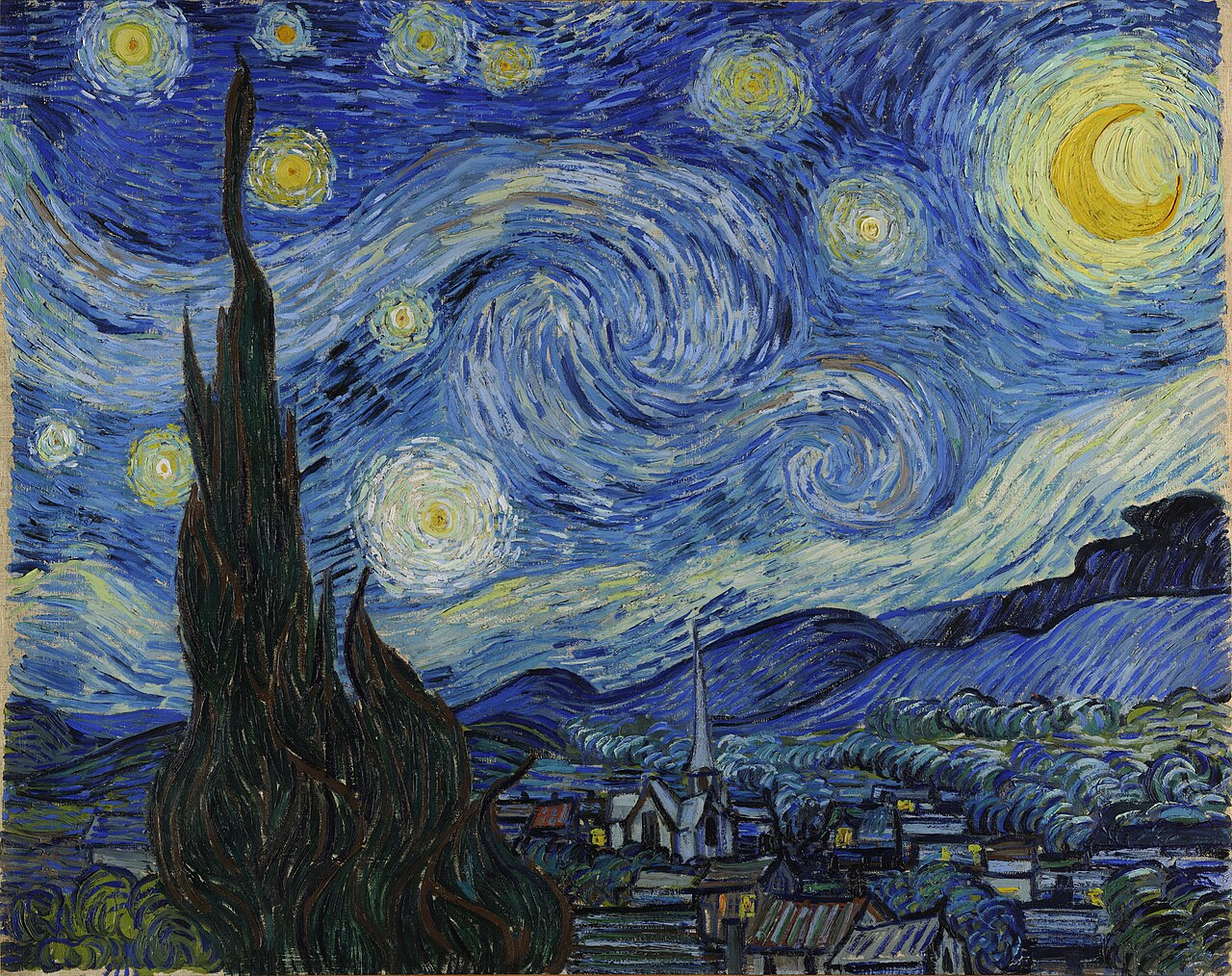
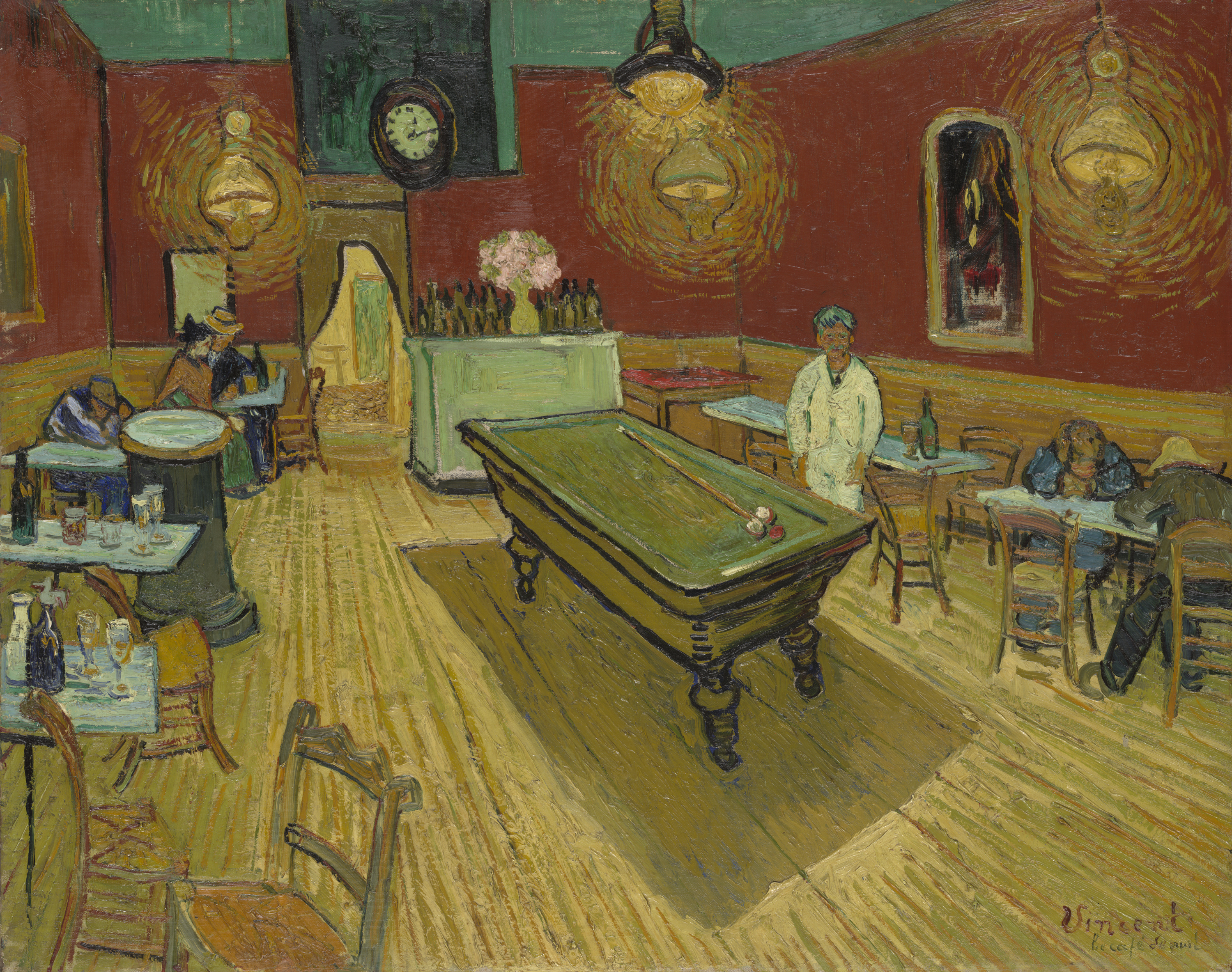
I was very young when I first encountered The Starry Night and later The Night Café. I did not understand them then, not in any intellectual sense. But they took my breath away. As if I got inside the paintings, like I knew the people sitting in that café. The vision always remained in my eyes. It was as if a window opened into a world that felt distant, unfamiliar, and yet deeply, inexplicably mine. I think that was the beginning of my enduring, lifelong affair with Europe—because of the cypress trees, the wheatfields, the sky, the moon. Everything about the subjects changed something in me so fundamentally that everything is different in the way I see it. But more truthfully, it was the beginning of my devotion to you.
I do not remember who first introduced me to your work. That detail has dissolved with time. What remains is a strange certainty—that I have known you far longer than I should have, as if your presence was waiting for me before I had the language to receive it.
And then, slowly—like a flower that very slowly opens and blossoms—you revealed yourself to me. Not all at once, but in fragments. A painting here. A letter there. A whisper of your life with Theo. Each discovery felt intimate, almost private, as if I were being allowed into something sacred.
You taught me to see pigments not as colors, but as living matter. You taught me that a stroke is not merely technique; it is emotion made visible. I have looked at your canvases and wondered how such small, trembling movements of the hand could hold so much intensity, so much longing, so much truth. There is something almost unbearable in it.
And then there is you—the man behind it all. Your restlessness. Your hunger. Your devotion to creation, even when the world gave you so little in return. I do not romanticize your suffering, but I cannot deny its presence in your work. It reaches across time. It unsettles me. It calls me closer.
There are days when I feel that I have borrowed my love for painting from you—that whatever tenderness or curiosity I hold toward art has passed through your hands before it reached mine. You have shaped not only how I see, but how I feel. It may sound unreasonable—this attachment to someone I have never known. But it does not feel distant to me. It feels steady. Constant. Like a light that does not flicker.
You have become, in some quiet and unwavering way, my lighthouse.
And I wonder, sometimes, what it means to love someone like this—from afar, across time, without expectation, without return. Perhaps this is the purest form of love: to simply hold someone deep inside the heart, to let their existence alter yours without ever asking to be seen.
Yours, in a silence that has always known your name.
 When a Love Letter to Vincent Became Something I Could Walk Into
 When a Love Letter to Vincent Became Something I Could Walk Into
There are moments when something that has lived quietly inside you takes form in the outside world. Not as memory, but as experience.
Last year, in Berlin, I stepped into an immersive exhibition dedicated to Vincent van Gogh. His paintings were no longer confined to canvas. They unfolded across walls, floors, and space itself. The sky moved. The colors expanded. The brushstrokes—once intimate—became surrounding.
And then there was the date.
May 30th.
His birthday.

There was no planning behind it. No intention. Yet standing there, inside the moving sky of The Starry Night, it felt less like coincidence and more like a quiet convergence. As if something that had begun years ago had, without effort, reached a point of presence.
Art historical studies, including those preserved by the Van Gogh Museum and the Van Gogh Letters Project, often describe his work through technique—impasto, movement, color intensity. But these words feel insufficient when the work is experienced at scale. Because what becomes visible then is not just technique, but urgency. His way of seeing does not sit still. It insists.
Even institutions like Tate Modern have explored how immersive encounters with art alter the role of the viewer. One is no longer observing. One is participating. The distance collapses.
Standing there, it became clear that the connection had never been about understanding his paintings. It had always been about entering them.
And perhaps this is what a Love Letter to Vincent ultimately becomes—not a letter in the literal sense, but a lived relationship with art. Something that moves with you through time. Something that deepens quietly. Something that, without asking, changes the way you exist in the world.
External DoFollow Links:
- https://www.vangoghmuseum.nl
- https://www.vangoghletters.org
- https://www.tate.org.uk
- https://www.apa.org
- https://vangoghroute.com/