
Learn what perimenopause can feel like, how Ayurveda understands Rajonivritti, and which practical habits may support you—while knowing when to seek medical care.
What This Transition Feels Like in My Own Body
My body has apparently held a private meeting and revised its constitution without consulting me.
One moment, I am sitting peacefully; the next, a furnace has been lit somewhere beneath my skin. Heat rises through my chest and face, my hairline becomes damp, and I begin looking suspiciously at perfectly innocent ceiling fans. Then the heat disappears as abruptly as it arrived, leaving me drained, as if my body has performed a complicated fire ritual using my energy as the offering.
There are mood swings. Sleep disturbances. Bloating that can make an ordinary lunch feel like a state banquet. My bowels, once reasonably civilised, have become politically unstable. Some days my skin produces mysterious rashes. My hair falls as though I am a golden retriever. Energy drains away without explanation.
And then there is anxiety. Not always anxiety about something. Sometimes it arrives before thought: a tightening chest, a wave of unease, a sense that something terrible is about to happen, although nothing is happening except perhaps the pressure cooker whistling in the kitchen.
Welcome to perimenopause: the biological transition many women aged between 40-50 are never adequately prepared for. I am writing as a woman living through these changes, not as a doctor or an Ayurvedic practitioner. I am still learning, and much of that learning begins with trying to understand what is happening in my own body.
What is perimenopause?
Perimenopause is the transition leading up to menopause. During this time, ovarian hormone levels fluctuate, periods may become irregular, and symptoms can appear, disappear, and return wearing a different hat.
Menopause itself is identified retrospectively, after twelve consecutive months without a menstrual period, provided there is no other medical cause. It is a natural life stage, not a disease—and it does not mean womanhood has expired. But “natural” should never be confused with “always comfortable.”
Hot flushes, night sweats, disrupted sleep, mood changes, anxiety, low energy, vaginal and urinary changes, and muscle or joint discomfort are recognised menopausal symptoms. Hair thinning and changes in digestion can occur around midlife too, but persistent bowel problems, sudden hair loss, or unexplained rashes should not automatically be blamed on hormones. Thyroid conditions, nutritional deficiencies, allergies, medication effects, and other health issues can cause similar symptoms. Menopause may be an enthusiastic suspect, but it should not be allowed to confess to every crime in the neighbourhood.
What does Ayurveda call menopause?
I’ve been reading up on how to navigate this whole perimenopause shift, and Ayurveda actually has a really beautiful, grounding perspective on it. Instead of treating it like a medical condition to be fixed, it looks at it as a natural transition (Rajonivritti kala ) where our internal energies, especially Vata and Pitta, get a little out of whack. Because these shifting energies are what trigger the hot flashes, sleep issues, and anxiety we always hear about, the focus is all about bringing the body back into balance naturally. It relies on warm, nourishing foods, calming daily routines, and awesome adaptogenic herbs like Shatavari and Ashwagandha to cool down the internal heat and soothe the nervous system. Honestly, it feels like a much gentler, holistic way to take care of ourselves and stay balanced during all these changes!
The Ayurvedic term commonly used for menopause is Rajonivritti. Rajas or raja refers here to menstrual flow, while nivritti means cessation or withdrawal. The term therefore describes the ending of menstruation. Some modern Ayurvedic practitioners use Rajonivritti avastha for the stage surrounding that change.
Classical Ayurveda did not define “perimenopause” with the same diagnostic boundaries used in modern medicine. It considered this transition within the broader processes of ageing and change in the body. That distinction matters: Ayurveda offers a traditional interpretive framework, not an ancient, word-for-word version of modern endocrinology.
In contemporary Ayurvedic discussions, perimenopause is often considered through ideas such as:
- Vata vriddhi (The Scattered Wind): Think of Vata as the wind and movement inside you. When it increases or gets disturbed (vriddhi ), it is like a chaotic storm blowing through your body . Because wind is dry, cold, and erratic, this imbalance shows up as dry skin, joint cracking, sudden anxiety, racing thoughts, and unpredictable sleep patterns.
- Pitta prakopa (The Raging Fire): Pitta represents your internal fire and metabolism. When it becomes aggravated or excessive (prakopa ), it is like turning the thermostat up too high or triggering a wildfire . This excessive internal heat directly causes physical inflammation, intense hot flashes, night sweats, skin rashes, and feelings of irritability or impatience.
- Agni vaishamya (The Flickering Campfire): Agni is your metabolic and digestive fire. When it becomes irregular (vaishamya ), it behaves like a weak campfire caught in a gusty wind . One day it burns brightly and digests food perfectly; the next day it barely sputters, leading to erratic appetite, bloating, gas, and poor absorption of nutrients.
- Dhatu kshaya (The Emptying Battery): Your Dhatus are the seven structural layers of tissue that build your body (like blood, muscle, and bone). When they experience gradual depletion (kshaya ), it is like a rechargeable battery slowly losing its maximum capacity . As hormones shift, the body struggles to deeply nourish these layers, leading to physical weakness, thinning hair, or loss of bone and muscle density.
- Ojas kshaya (The Leaking Shield): Ojas is the ultimate, refined essence of your digestion and health—your physical immunity and emotional resilience. When it becomes diminished (kshaya ), it is like wearing down your protective energy shield . You are left feeling completely drained, highly sensitive to stress, emotionally fragile, and lacking your usual vibrant “glow.”
My periods have changed too
When we talk about perimenopause, we tend to talk about periods stopping. There is less conversation about what can happen before they stop. My cycle used to be roughly twenty-eight days. Now it can vary from twenty-eight to thirty-five days. The bleeding has increased, and the time I think of as PMS seems to have increased along with it.
For what feels like half the month, I am dealing with migraine problems, cramps, bad moods or some combination of them. It is no longer simply a matter of enduring a few uncomfortable days and getting on with life. The discomfort seems to have taken a rather generous share of the calendar.
Meanwhile, there is work. There is home. There are the ordinary responsibilities that do not disappear because my body has decided to conduct an internal renovation. I have learnt that periods can become heavier or lighter during this transition, and may arrive more or less often. My experience is one version of that change, not a pattern every woman will follow.
What feels significant to me is the change from my own familiar rhythm. I knew how my body usually behaved. Now I am having to learn its habits again.
Exhausted and restless at the same time
One particularly unfair combination is feeling exhausted and agitated together. The body wants to lie down while the mind wishes to organise a committee meeting at 2:17 in the morning. There is something unsettling about being tired enough to want sleep and still finding it difficult to settle. Then the next day arrives, carrying its usual demands, and I am expected to meet it with the patience and concentration of someone who has spent eight peaceful hours in bed.
Anxiety can be equally difficult to explain. Sometimes there is an obvious worry. Sometimes there is only the feeling of alarm, followed by an attempt to discover what I am supposed to be alarmed about.
The heat and the short fuse
The hot flush is one kind of heat. Irritability can feel like another. When I am already overheated or tired, even a small inconvenience can feel like a constitutional crisis. Someone leaves a wet spoon near the sugar bowl, and suddenly civilisation itself appears to be collapsing.
I can laugh at that image and still acknowledge the discomfort underneath it. A short temper is harder to manage when I have slept badly or am in pain. There is little wisdom in pretending that I should be able to carry on unaffected.
Some women find that caffeine, alcohol, spicy food or very hot drinks make flushes worse. Others notice different triggers. The useful lesson for me is to observe what actually happens, rather than inherit a rigid list of forbidden foods.
Digestion has become less predictable
One meal is tolerated perfectly; the same meal on another day causes gas, bloating, reflux or an urgent negotiation with the nearest bathroom. This is another part of midlife that can make the body feel unfamiliar. Eating is an ordinary pleasure, and it becomes tiresome when an ordinary lunch seems to require a risk assessment.
But happening at the same time as my changing periods does not prove that everything has the same cause. Persistent bowel problems, unexplained rashes and noticeable hair loss need attention in their own right. I cannot identify their cause simply because I happen to be at this stage of life.
Menopause may be an enthusiastic suspect, but it should not be allowed to confess to every crime in the neighbourhood.
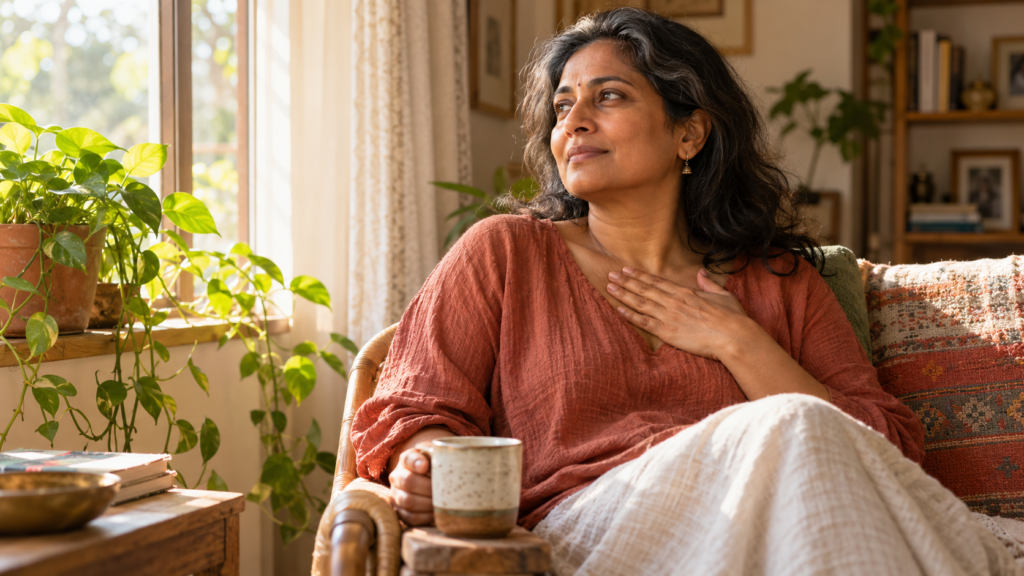

Quiet warmth by the window
Gentle Ayurvedic-inspired habits for perimenopause
Keep a steady rhythm. Try to wake, eat, move, and sleep at broadly consistent times. A predictable routine can make daily life feel more manageable.
Eat enough. Midlife is not the time for starvation diets. Protein, calcium, fibre, healthy fats, and sufficient overall nourishment support muscle, bone, hair, and energy.
Choose food you tolerate. Freshly prepared, simply cooked meals may be comfortable for some people. Use spices such as cumin, coriander, fennel, ginger, and turmeric according to your tolerance. If heartburn or burning symptoms are prominent, large amounts of chilli or ginger may make them worse.
Move in ways that build strength. Walking, strength training, yoga, and mobility work can support general health, mood, sleep, muscle, and bone. Exercise should build capacity, not leave you more depleted.
Make room for quiet. Constant news, screens, noise, arguments, and multitasking can keep an already strained nervous system on alert. Small pauses are practical care, not a luxury.
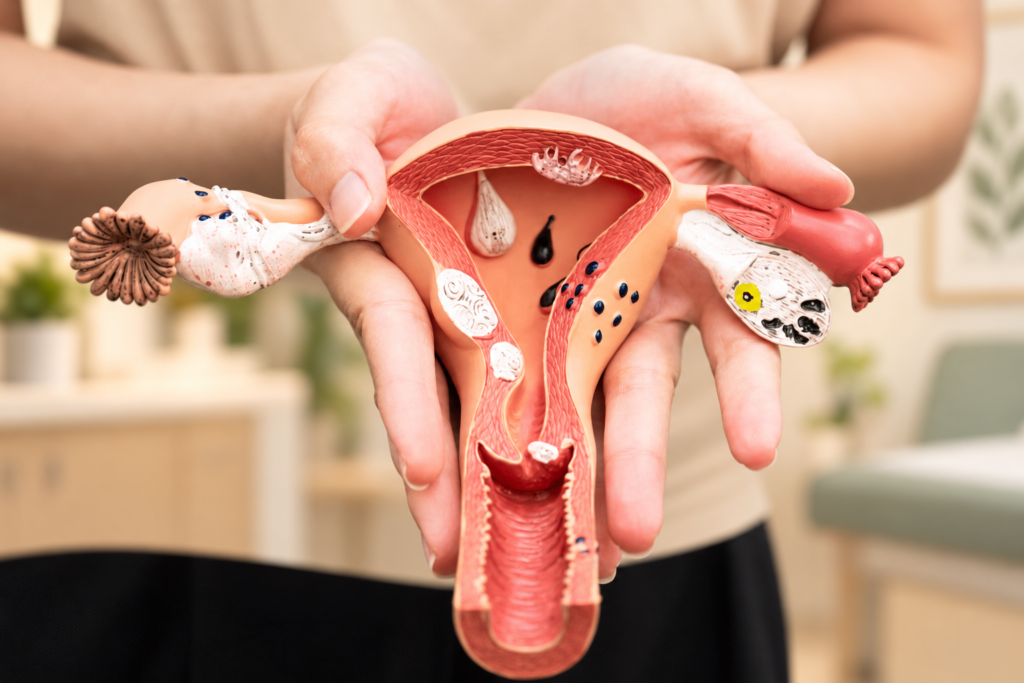

What to avoid—and when to seek medical advice
Do not assume every symptom is “just perimenopause.” New or persistent rashes, severe bowel changes, heavy or unusual bleeding, fainting, marked palpitations, unexplained weight loss, or severe depression warrant medical assessment. Seek urgent care for chest pain or pressure, especially with breathlessness or pain spreading to the arm, jaw, or back.
Do not treat recurring panic-like episodes only with herbal tea. Slow breathing and grounding may help in the moment, but recurrent or intense anxiety deserves professional evaluation. A clinician can help distinguish perimenopause-related symptoms from other causes and discuss suitable support.
Do not start several herbs at once. If a reaction occurs, you will not know which well-meaning root caused the mutiny. “Natural” does not automatically mean harmless. Ashwagandha, for example, can interact with health conditions and medicines and may not be suitable for everyone. Shatavari may also be unsuitable for some people, including those with certain allergies or hormone-sensitive conditions. Ask a qualified clinician who knows your medical history and medications before using herbal products.
And do not let Ayurveda prevent you from discussing evidence-based perimenopause care with a doctor. Lifestyle support, psychotherapy, non-hormonal medicines, and menopausal hormone therapy may all have a place, depending on a person’s symptoms, health history, preferences, and risks. Traditional practices and modern care can sit at the same table.

A different way to understand the transition
Rajonivritti does not have to be romanticised. There is nothing spiritually superior about waking at 3 a.m. drenched in sweat and furious with a bedsheet. But the transition can be met with respect and curiosity.
The body may be less willing to absorb endless irregularity without protest. It asks for rhythm, nourishment, stronger muscles, honest rest, and fewer pointless battles. It may ask a woman to stop treating her own needs as the least important item in the household.
Perhaps that is one meaning we can make of this stage of perimenopause. Menstruation ends; the woman does not. Her energy and priorities may change. There can be room for discernment, creativity, authority, and a less apologetic relationship with time.
The flames are real. So are the exhaustion, anxiety, temper, tender skin, and hair collecting around the shower drain like evidence.
But perhaps the body is not betraying us, perhaps it is finally finding peace.
In the next post, The Midlife Apothecary, I turn to the practical side: the herbs, teas, food and morning rituals I am exploring, and what I am learning about keeping that care simple.


